Story of an Index of a Story etc.
1. Short summary of November and December
2. List of books and articles used in November and December
3. Notes made during November and December
4. Scans of Height Map of Yesterday
1.
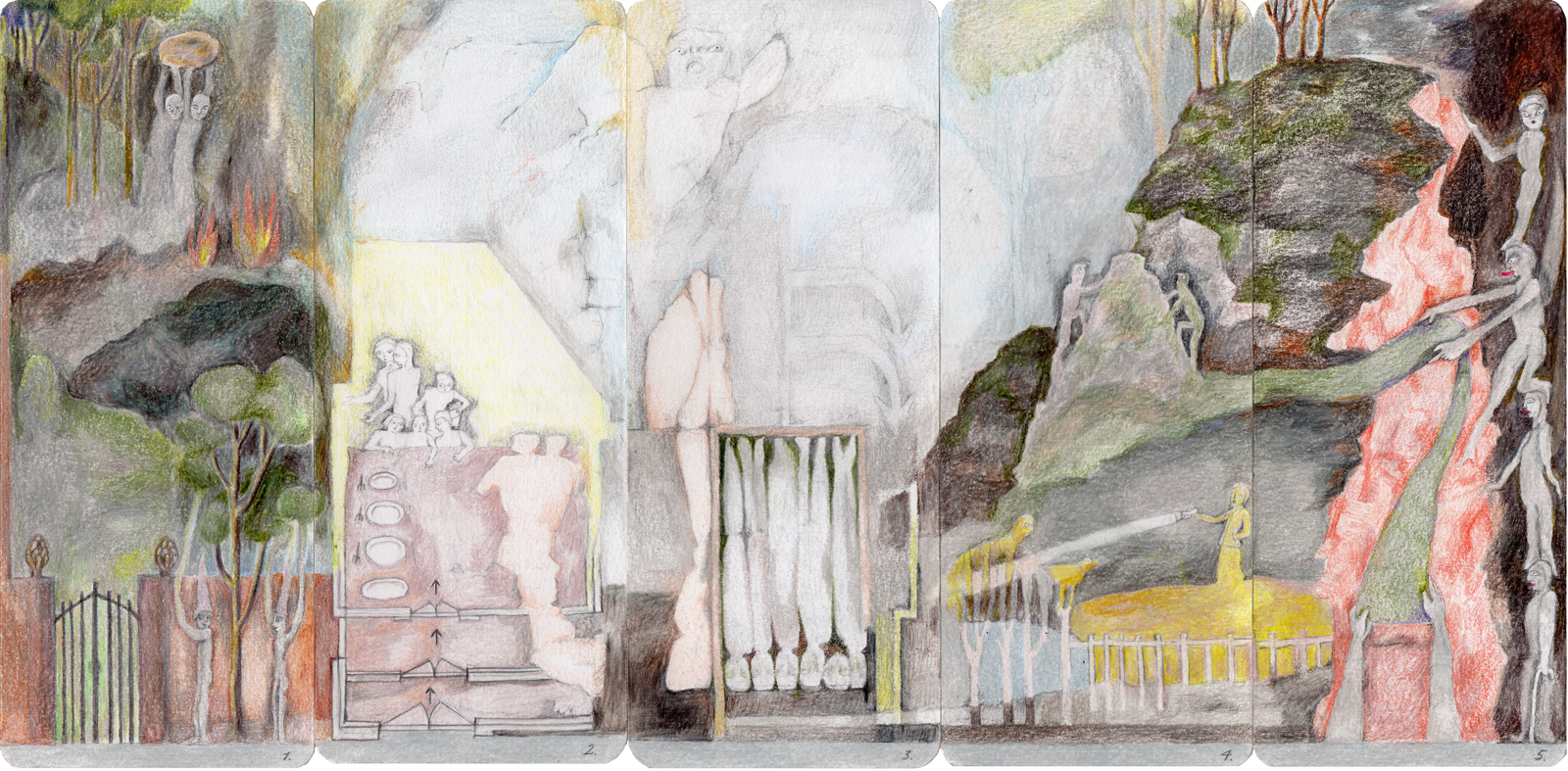
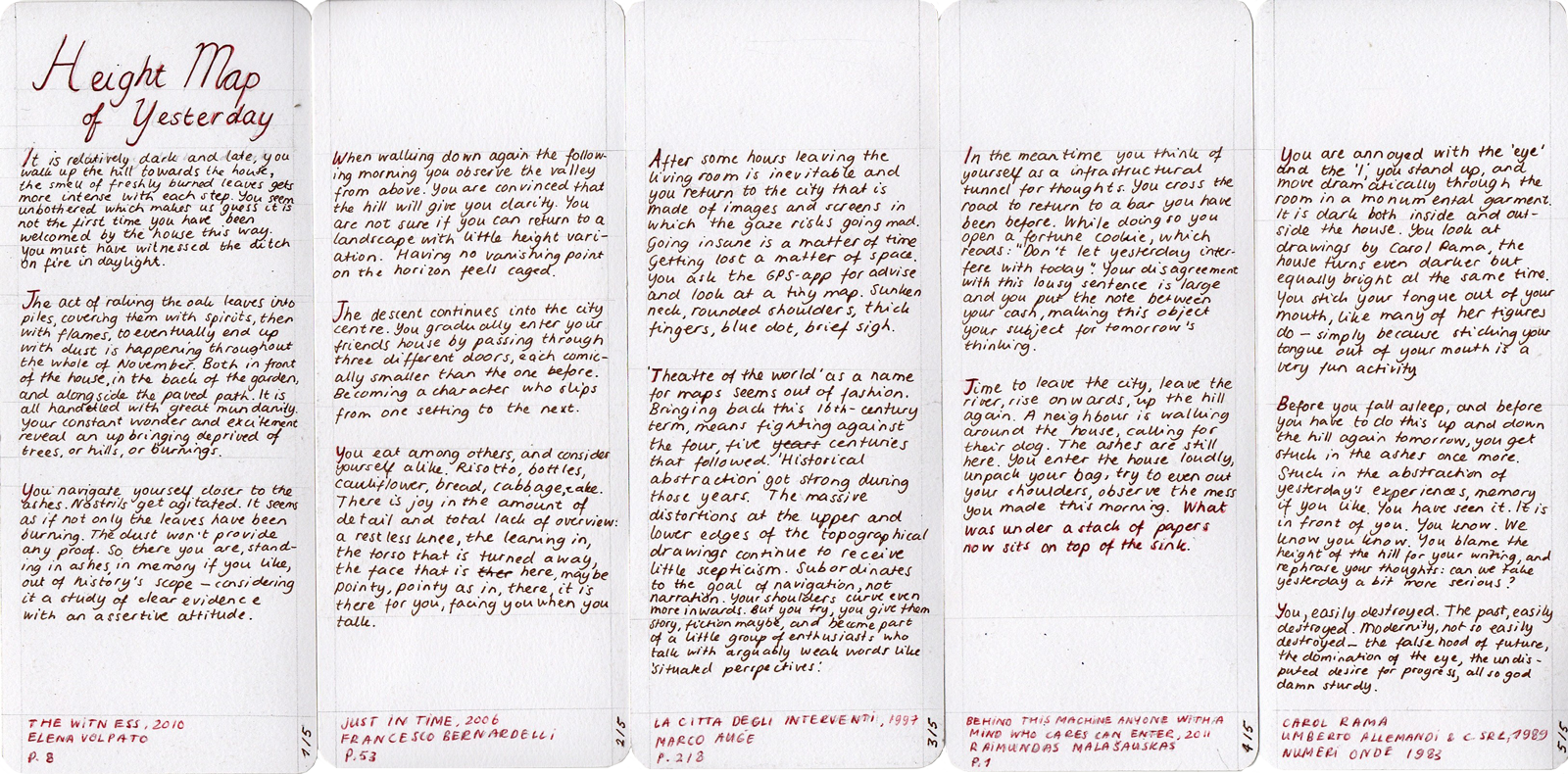
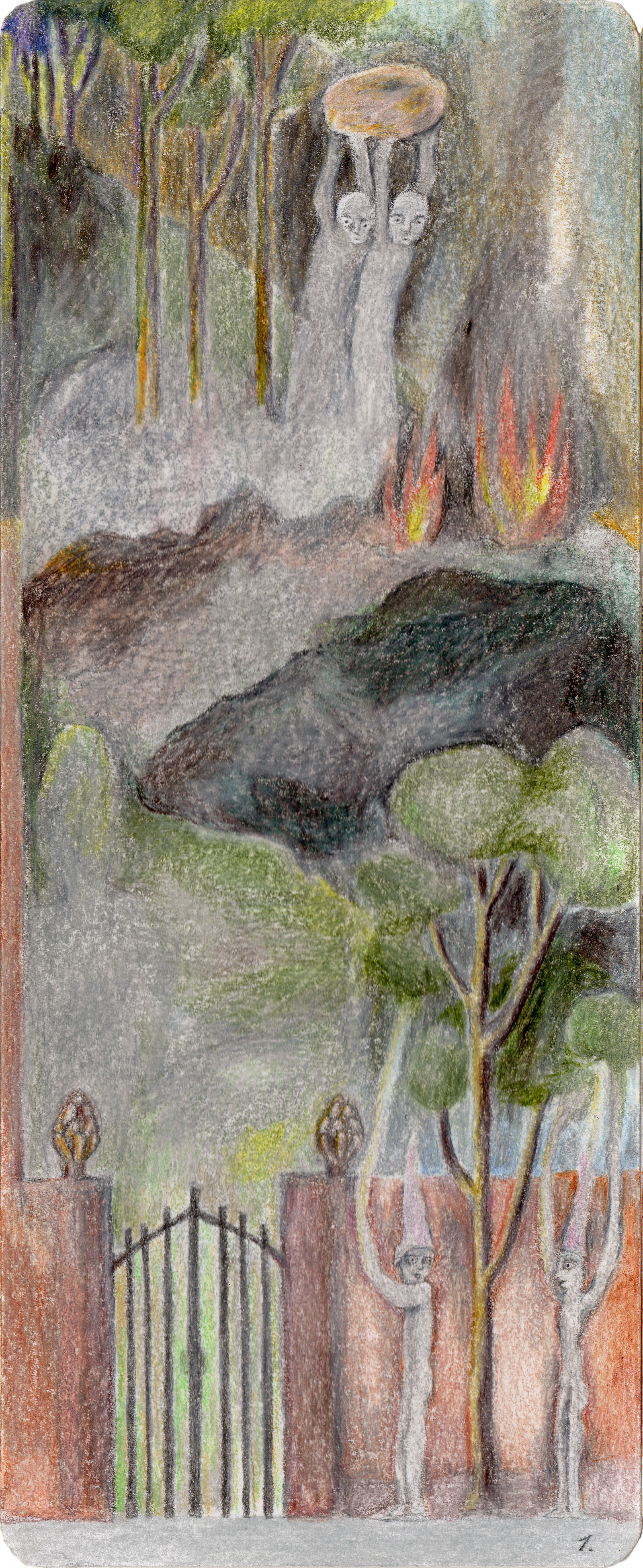
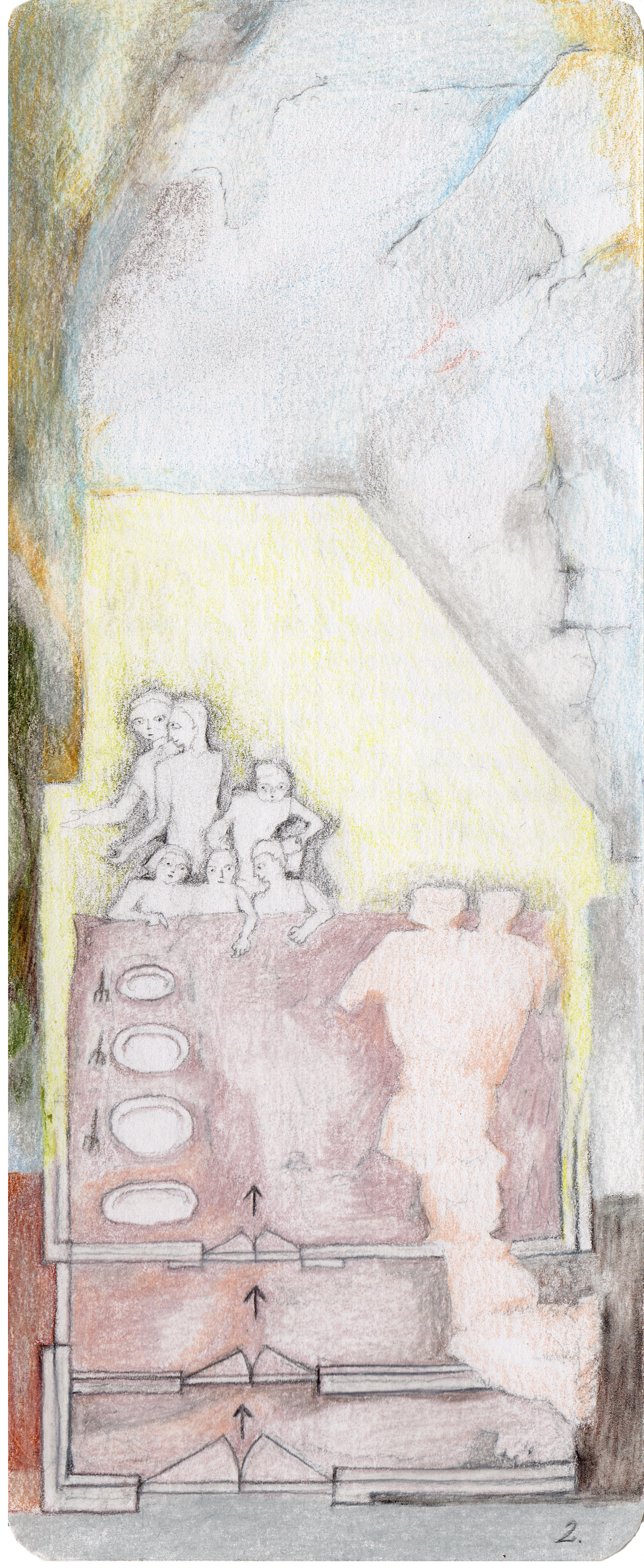
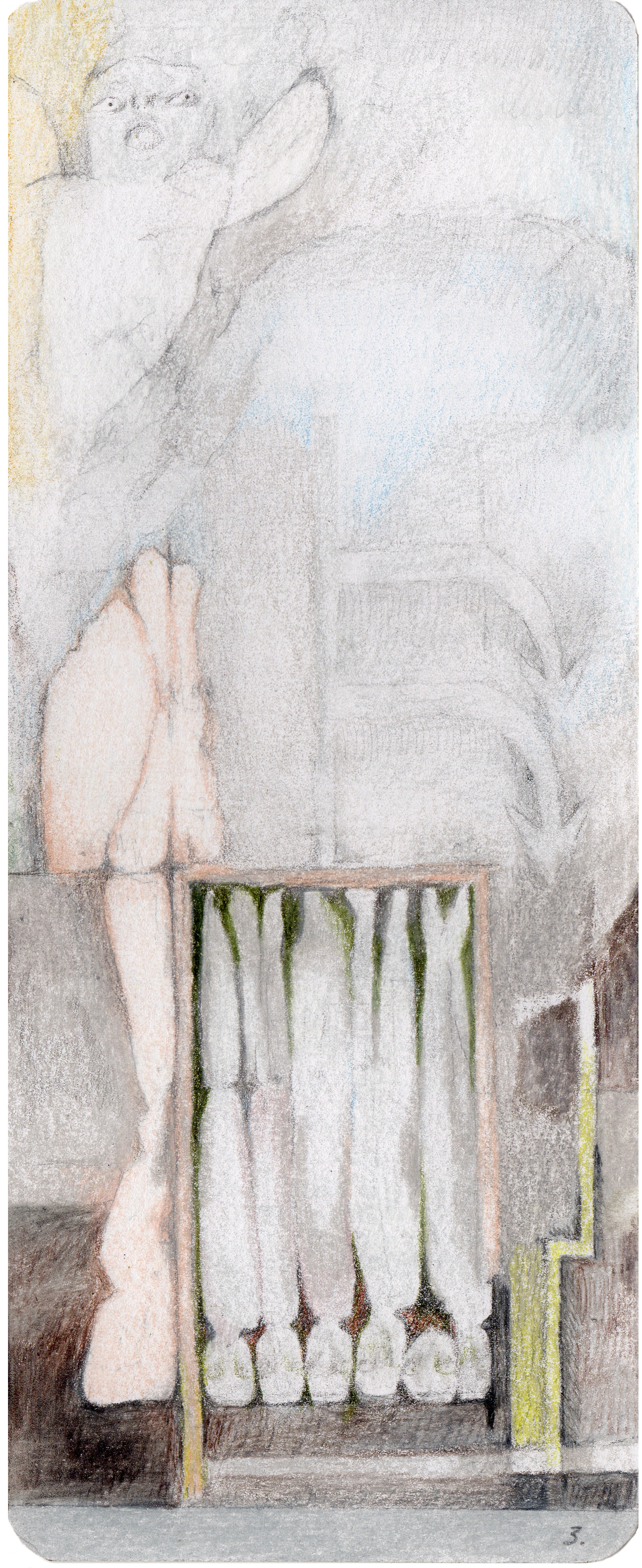
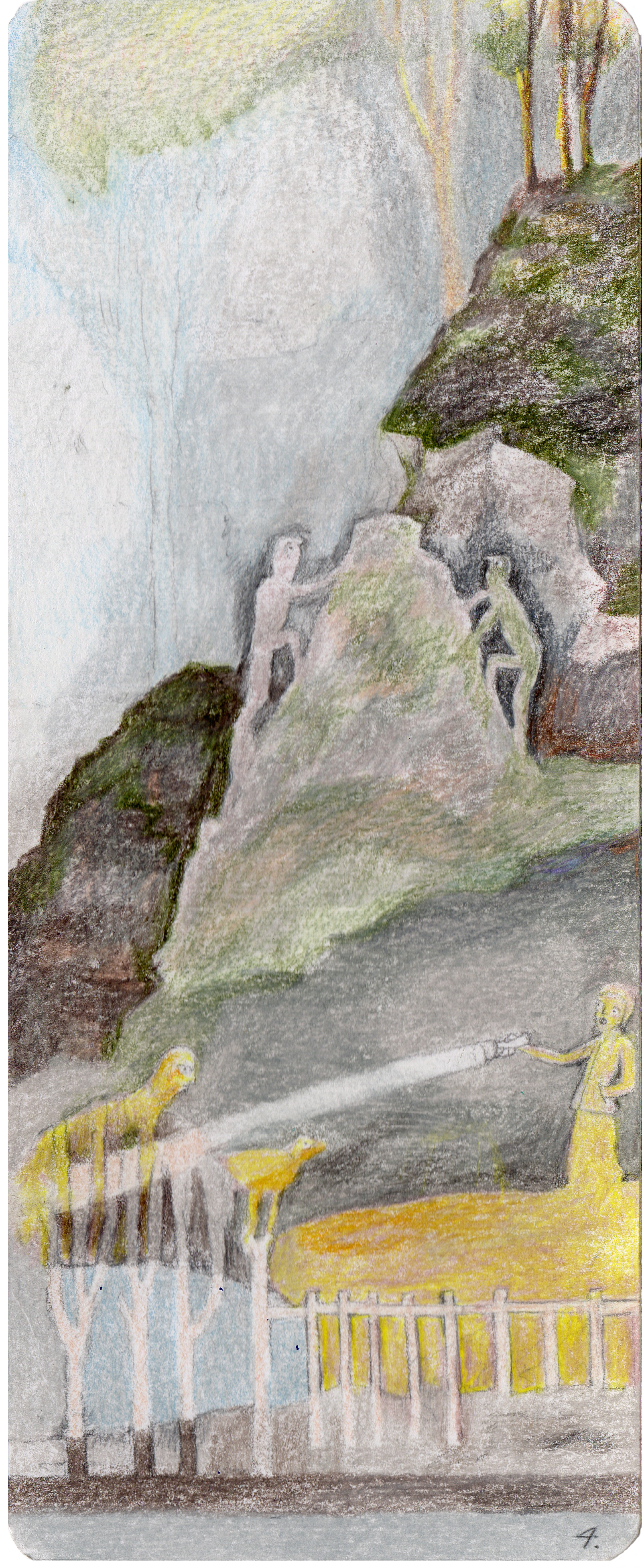
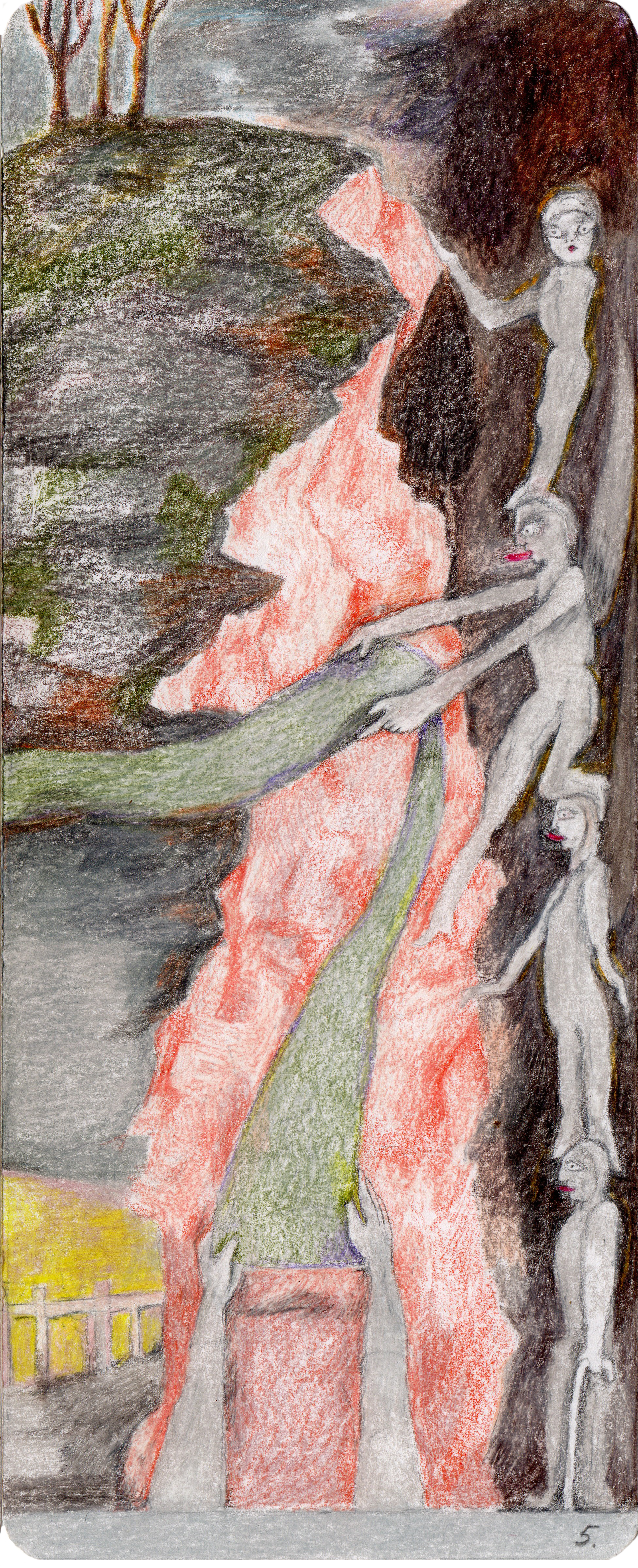
The last two months of 2025 I spent in Turin. I got invited by Almanac to work with their books, a collection given to the organization by Gail and Rosangela Cochrane. In those months I researched library systems and talked about indexing; I asked Ire to work with me for two weeks; we wrote texts based on books from the collection; we cooked and had big dinners with Almanac and their friends; I showed drawings and made a work called Height Map of Yesterday: five bookmarks, together forming one drawing (front) and one story (back), the bookmarks are placed in the library of Almanac between the pages of the books they refer to.
(A) = in collection of Almanac
(A) The Witness. ed. Elena Volpato. 2010.
(A) Just in Time. ed. Maxine Kopsa and Will Holder. 2006.
(A) Il Romanticismo. Mario Puppo. 1994.
(A) La Città Degli Interventi / The City of the Interventions. ed. Pinto, Roberto. 1997.
(A) Behind this machine anyone with a mind who cares can enter. Catalogue of the exhibition with the same title by Jason Dodge, text by Raimundas Malašauskas. 2011.
(A) Carol Rama. Paolo Fossati. 1989.
(A) A Certain Style The Art of the Plastic Handbag, 1949-59. Robert Gottlieb. 1988.
(A) Hendrik Håkansson: An Introduction to the Birds. Henrik Håkansson. 2003.
(A) Serse: Notti Bianche. a.o. Riccardo Caldura, translated by Jackie Fragapane. 1994.
(A) Lettere d'amore del Profeta. Kahlil Gibran, translated by Paulo Coelho. 2019.
Pandora's Hope: Essays on the Reality of Science Studies. Bruno Latour. 1999.
Multidimensional Citation. Laura Coombs, Laurel Schwulst, and Mindy Seu. 2022.
An Image of My Name Enters America: Essays. Lucy Ives. 2024.
Index, A History of the: A Bookish Adventure from Medieval Manuscripts to the Digital Age. Dennis Duncan. 2022.
Drive Your Plow Over the Bones of the Dead. Olga Tokarczuk. 2018.
The power to name and frame. Part of the Unbound Libraries Documentation. Eva Weinmayr. 2021.
Teaching the Radical Catalog. Emily Drabinski. 2008.
Calamities. Renee Gladman. 2016.
Overmorrow's Library. (podcast) Federico Campagna. 2022.
3.
7/11/2025
"At its most general, it [the index] is a system adopted as a timesaver, telling us where to look for things. The name suggests a spatial relationship, a map of sorts: something here will point you to - will indicate - something there." (Duncan, 2022, p. 3)
In the 14th century index referred to forefinger. The one next to the thumb, the one who points out. I like to think of the index finger when thinking of an index. The indicating comes with a body, a posture, positionality, etc.
I find myself in a place working with the formation of books in multitude, rather than entering the content. A collection that has the desire to become a library, shifting the 'keeping' into 'using'.
Library as a place where books, or other material, is kept for use but not for sale. If not a lending library, then often a reading room or scanning machine. Retrieving + sharing knowledge. The library as a form of archive. Archive as repository of recorded information, a place where public records, historical materials, documents, files, are preserved. More focus on 'keeping', less focus on 'using'. Of course the archive quite often also has a 'using' function, and the library a 'keeping' function. Libraries need to have a transparent infrastructure in order to be usable, to be argued, though even saying 'we don't have any infrastructure' makes it more usable?.
A blueprint, a map, a sewing pattern: I need to be provided with an underlying system, a peak into the backbones that made you come here, that made anything come here, otherwise I don't understand the here. The trail of traces is not additional, but essential. Thinking of 'usability' thus comes for me with a transparent infrastructure and traceability. That might be at the core of what I'm trying to get to when talking about archiving, cataloging, organizing, indexing: highlighting the hands, the marks, the body attached to the index finger.
Looping back to 'circulating references' (Bruno Latour) and 'multidimensional citation' (Laura Combs, Laurel Schwulst, Mindy Seu) -- texts I read and rephrase in the first weeks of being in Turin, trying to communicate my current brain to friends. The two texts/terms/concepts center the need for traceability in both the forming of information and the representation of information.
17/11/2025
bringing in narrative + etymology
working on something that could be read as an argument against isolation?
watching Pier Paolo Pasolini, Il Decameron, Love meetings, Tarik Saleh, Cairo Conspiracy
taking the metro from Dante
cutting lots of cavolo nero when home, eating sugar in between
21/11/2025
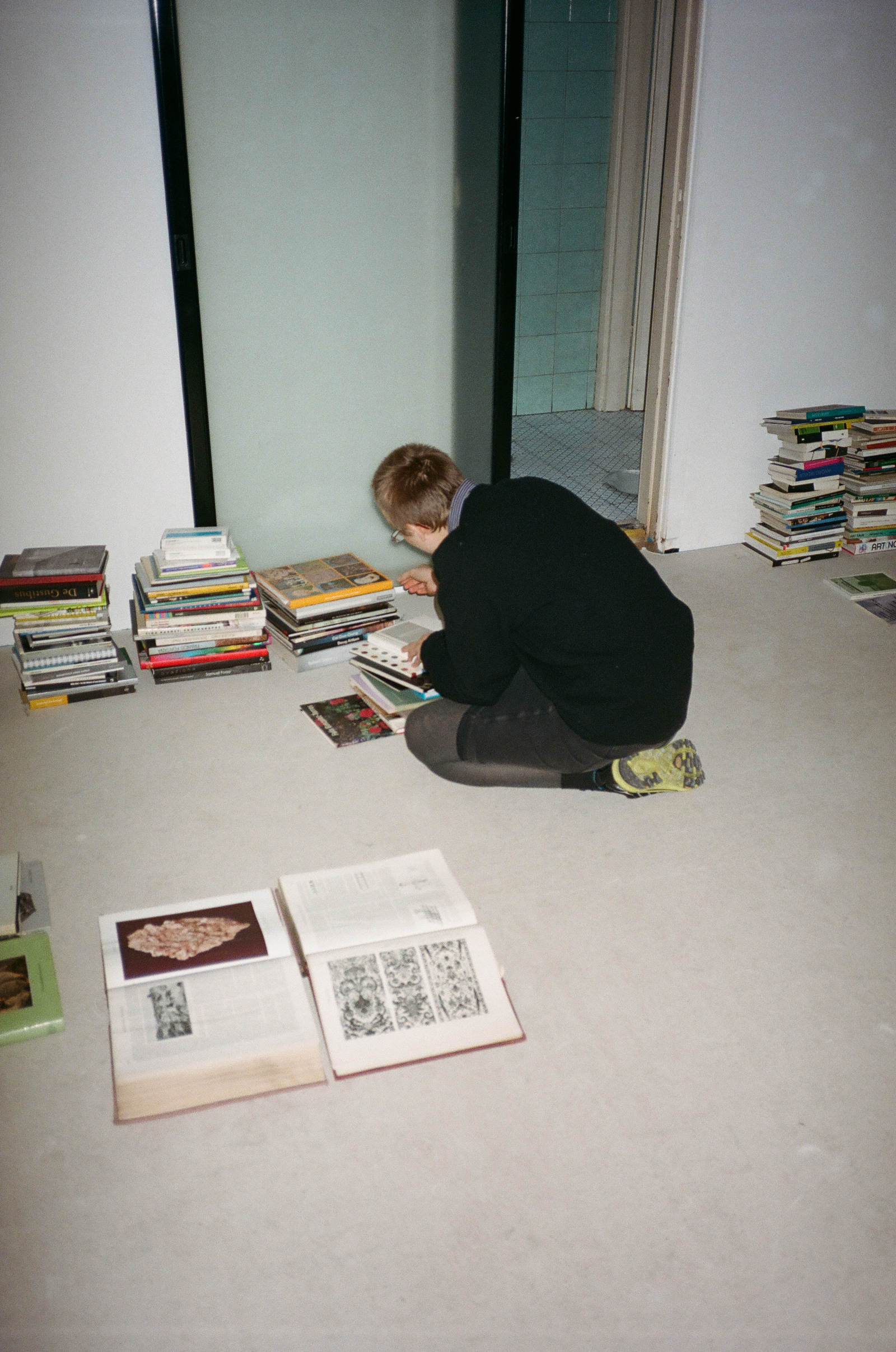
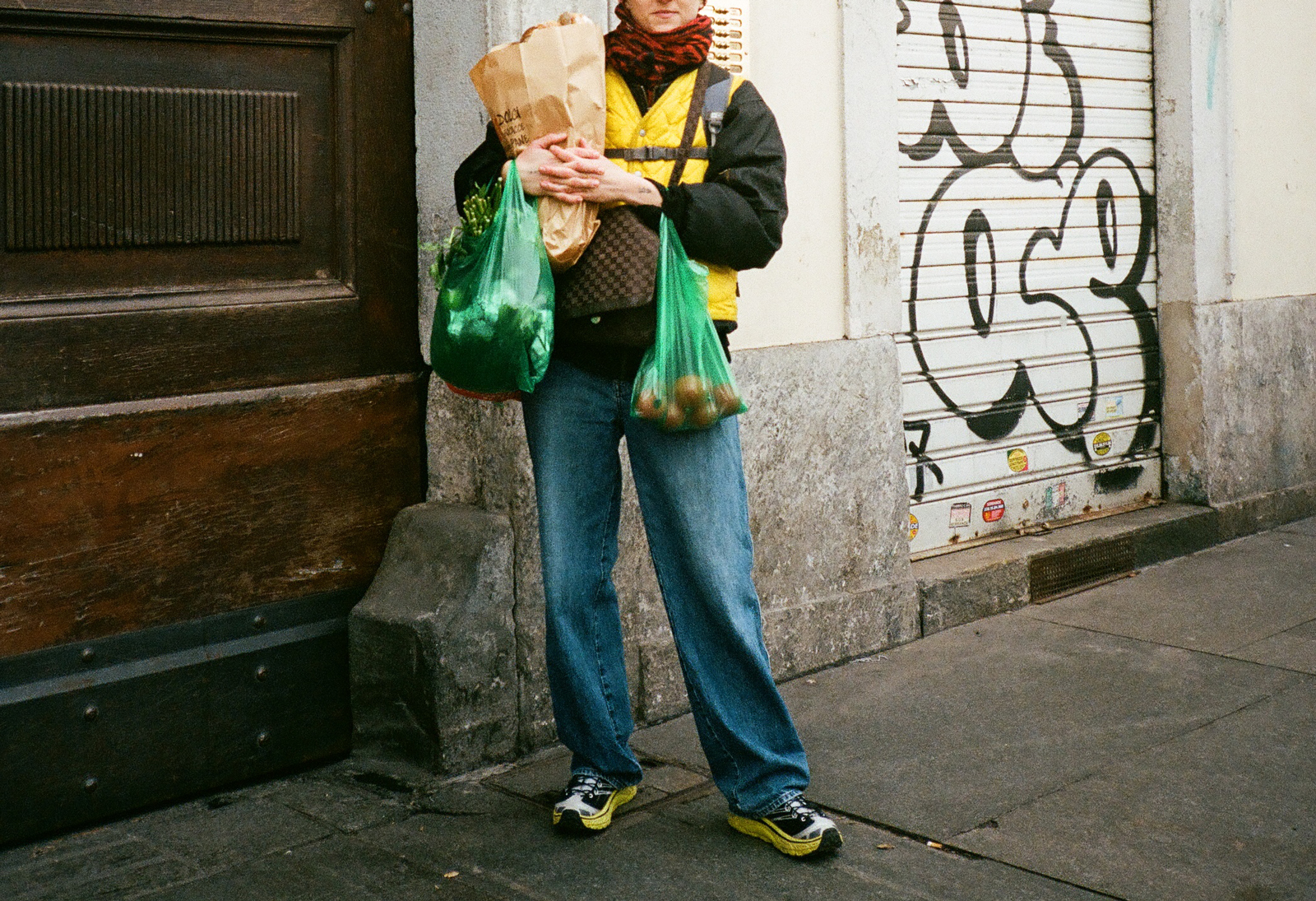
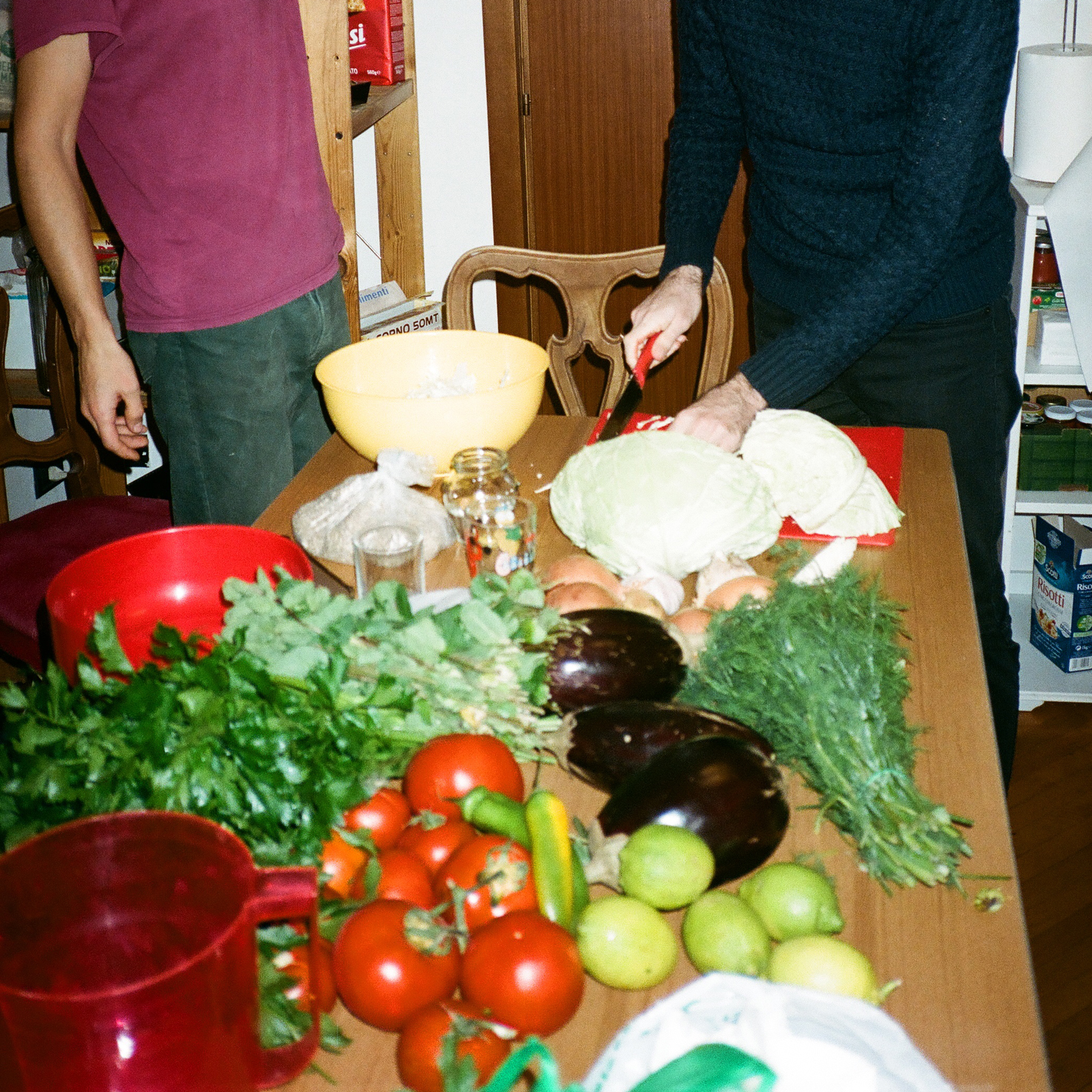
Before dinner and after talking about libraries and alternative ways of archiving Ire reads story 1 and I read story 2.
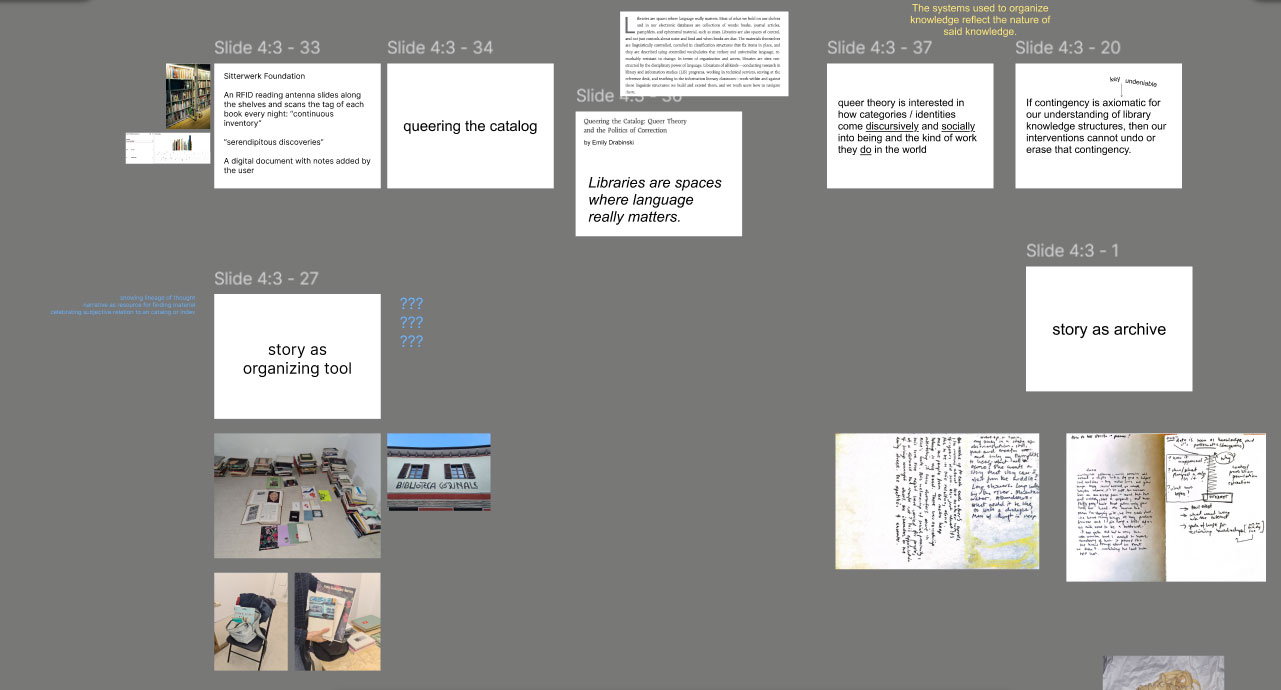
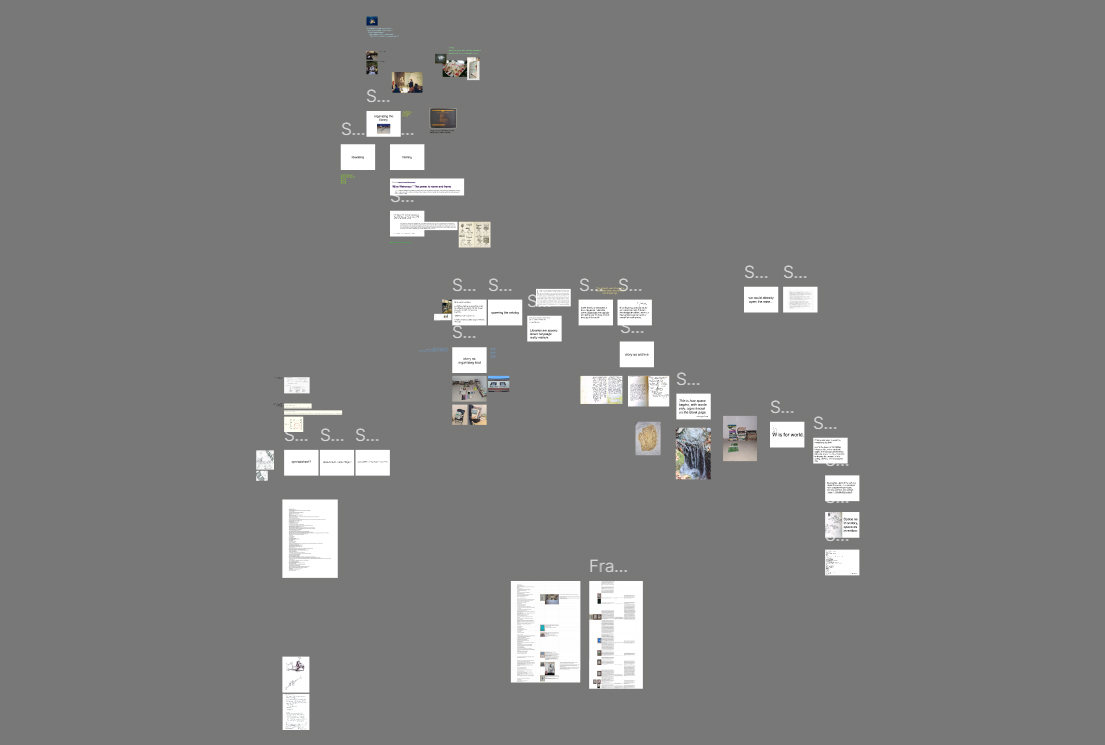
The dilemma, the constant push and pull, of both the liberating and limiting consequences of organizing the library (and organizing information in general), brought forward by Eva Weinmayr in The power to name and frame. At the same time classification seems necessary to find things, maybe less on a personal level, more on a public level, in which there is a need for a system that functions for not one person but many people.
Weinmayr points towards the political nature of the library catalogue: the meaning-making structure it has by the valorizing of particular point. Dewey Decimal System as example of excluding consequences of classification, caused by Melvil Dewey's fierce passion for efficiency and believe in universality. The Dewey Decimal System, one of the two most used library classification systems worldwide, created by Dewey in 1879, envisions one community of library users that has more or less a unified perspective. Dewey was also the president of the Efficiency Socyety and of the National Institute of Efficiency, and as the chairman of the committee on Efficiency in English writn and spokn. In his approach to classification the idea of serving 'the' public becomes evident. (rather than the awareness of 'a' public). For example: Christianity dominates the religion section (200), all other religions are brought together into 290-299, under 'other religions'. Non-Christian traditions are positioned as peripheral. Importance of librarian Dorothy B. Porter and Moorland-Spingarn Research Center.
22/11/2025
if there would be a list it would be something like this:
money is bad, but villas are good (Giulio, quoting a friend)
writers that move out of the city and can't stop writing about the rural
the role of class today
"I don't believe in identity only personality"
the relation between (nice) approachable people and cheap rent
the relation between rich people and their confusion with using public spaces
the meaning of sentiment
fallen angels
holes
why is it hard to bring in different generations
Sacra di San Michele, The Name of the Rose, why humor is not taken seriously and tragedy is
polenta with lots of butter
resting on the couch after being fed pasta
23/11/2025
She mentions fear over wine, takes off her hat and puts it back on, the one she wears inside out continuously when the season hits. We observe pale fries coming out if the kitchen while trying to visualize possession.
The detailed observations show a type of care that is exposed in another way than expressing feelings or empathy. The conversation on limits continue while you walk to the bookstore for I. to buy an English copy of Il Decameron. The hardcopy is good on the inside, not on the outside. You propose a new cover:
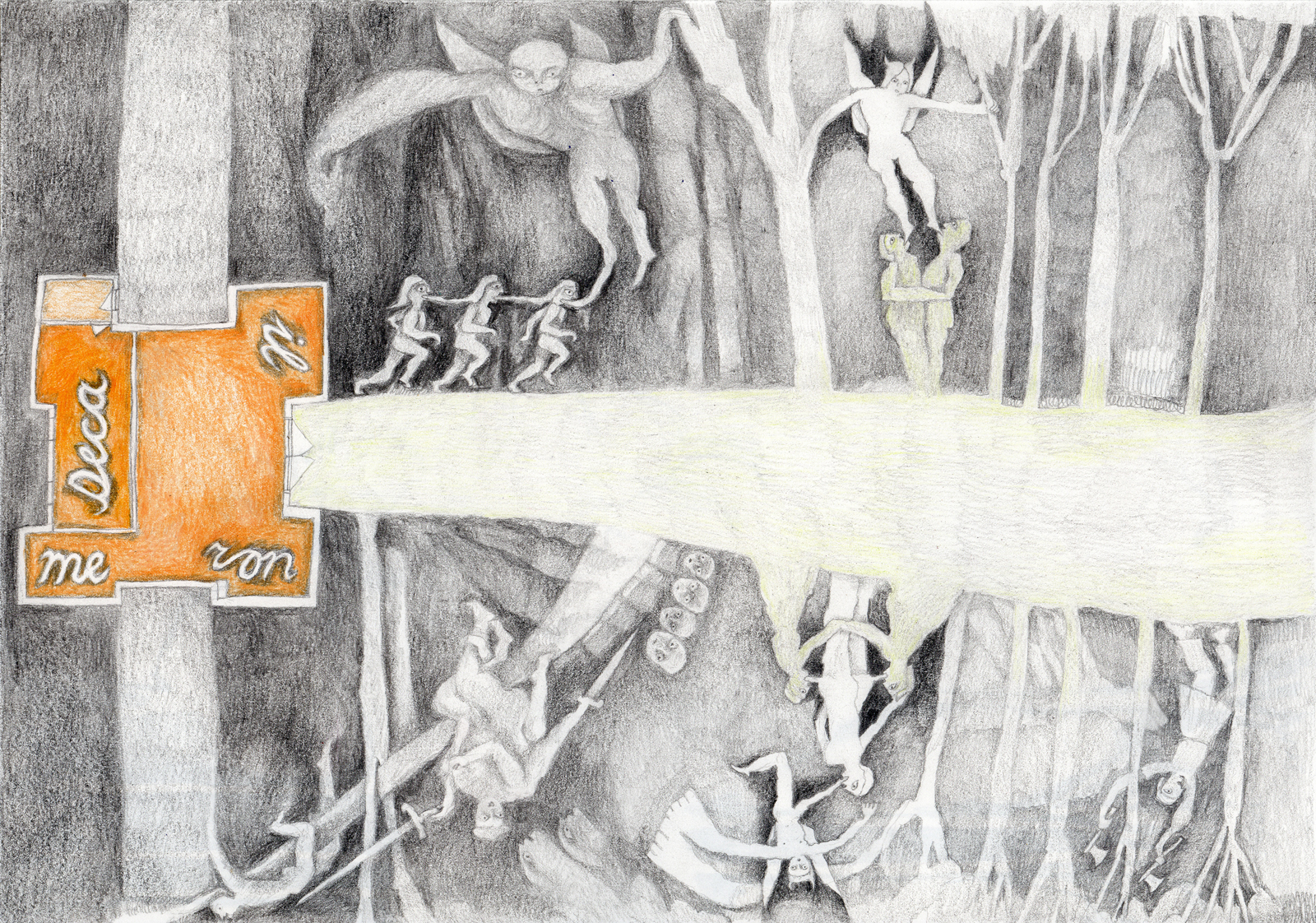
24/11/2025
There is a type of text -- the album review -- you call yourself an avid enthusiast of. Apart from any literal lyrical references, the text and the music live on opposites of the river. The writer is frantically trying to cross the water, not with petite elegance or nuanced weighing, but rather with ferocious metaphors and images. They throw any lifebuoy they can find into the river, drowning is not an option. And even when they manage to stay afloat, they still have to reach the other side. This bunch of risk-lovers knows very well that the limit of language is dragging them down, though they seem captivated by the glorious adventure of it all. You are on the riverbank cheering for the hopeless saplings, the ones dressed with goggles, the noisy motorboats.
25/11/2025
Two words that stuck with me from yesterday's lecture by Filipa Ramos came from Londa Schiebinger: 'narratively stripped' (I think she used this phrasing in her book Plants and Empire: Colonial Bioprospecting in the Atlantic World, 2004). It was mentioned when talking about the changing usage of certain words: fiber to fabric, trunk to beam, paper to document. So far the online lecture I watched with physical people, I lost focus and did not get more out of it. Londa Schiebinger seems intense, an assumption fully based on her Wikipedia-page, and the three 'fixes' she spends her life on: "Fix the Numbers of Women", "Fix the Institutions" "Fix the Knowledge".
Following Teju Cole in his dislike of the word 'fix', as mentioned in the Between the Covers podcast with David Naimon, I can't help to start off with a spoon of suspicion to Londa's body of work. The word 'fix' doesn't hold space for history or future, it is a 'let's get it over with and all will be good and well'. She deserves some actual reading though, let's see if my suspicion holds.
This morning I took the words 'narratively stripped' out of the context from yesterday and pasted them into our quest of 'narrativity' in the organization of the library. When dealing with systems that use previously produced data to generate information, it is only consequential that it will foreground biased and perspectives that have been most represented before. This default, full of bias and pumping itself up with an idea of universality, has never been in need of narrative, of explanation, of context. It has been stripped from history, subjectivity, backstory, backlinks, all in praise of yielding itself as truth, progress, modernity? Being narratively stripped is a luxury. It also sounds hot.
1/12/2025
There was a delay in your surroundings. The train is a sauna, you are knitting a sock. You avoid the traffic lights by going underground. Bar Dolphin serves you with wine. Restaurant Wang Jiao serves you with rice noodles and pak choi. Back to bar Dolphin for a caffè.
9/12/2025
Descending the hill the following morning, you call your friend and tell her that "no case of psychosis has ever been recorded in a person born blind" (Maddy Weavers, Active Cancelling, Real Review 17). Coincidental correlation or direct casual link stays uncertain.
The beginning of death might be introduced by a mathematical formula, but it is not the mathematics nor the formula that does the actual killing. You consider the assertive attitude towards countability pretty lethal.
I get a piece of Giandujotto, it starts to melt in my pants pocket during the evening and Giorgia leads me to the freezer. We eat it later that evening when it is proper solid again.
18/12/2025
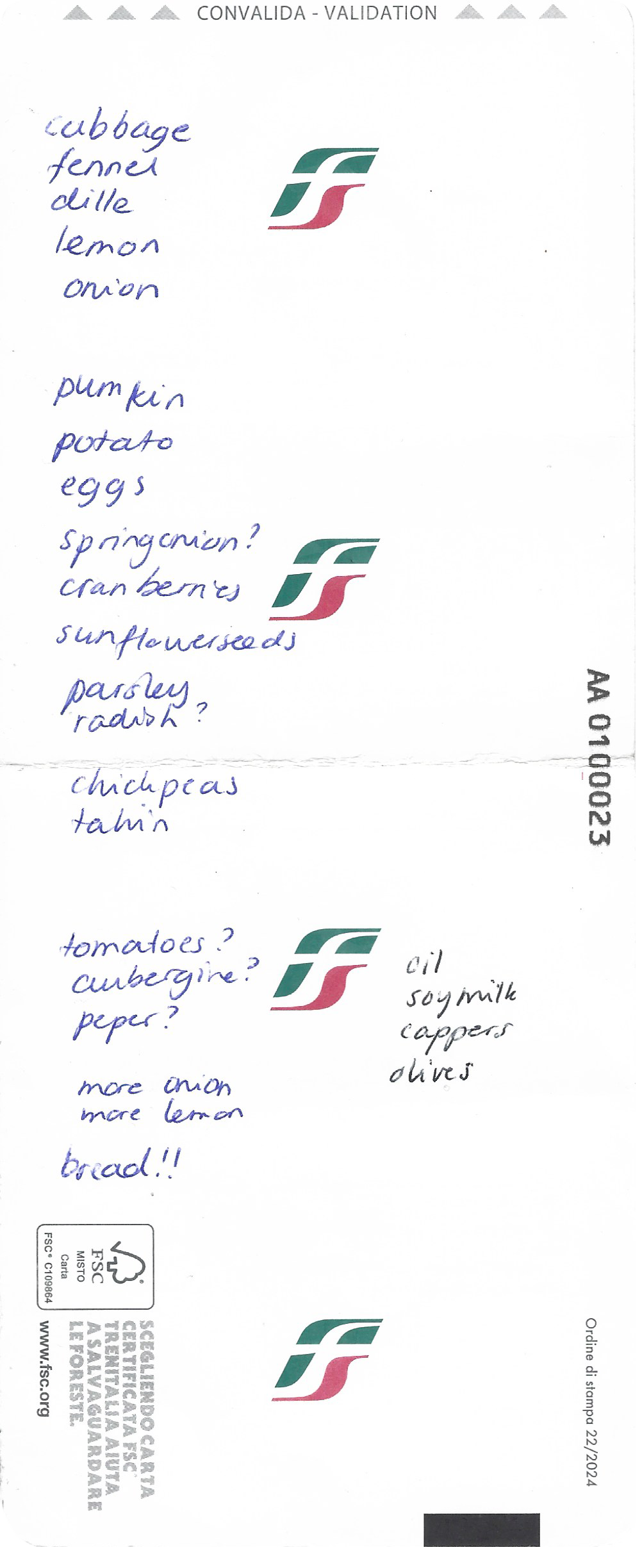
You use the size of a train ticket as the size for the bookmarks. Thinking of the old ticket from Torino to Milano you found in between page 52 and 53 of Il Romanticismo by Mario Puppo. You eat and read story 3: Height Map of Yesterday after dinner.
4.